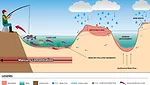
Leachate is generated from the decomposition of waste and precipitation coming into contact with the landfilled material. The water leaches out chemicals from the waste, including Per and Polyfluoroalkyl Substances (PFAS).
The U.S. Environmental Protection Agency (EPA) has released its preferred cleanup plan for the Sulphur Bank Mercury Mine Superfund site and is inviting the public to review and comment on the plan.
Researchers investigate PFAS levels in Sarasota Bay dolphins, who like humans, eat fish contaminated by plastic. Here's how their NIEHS project is progressing.
Researchers of a study published in Environmental Science & Technology say healthy alternatives to conventional furnishing materials reduce PFAS levels and don't have to cost more or work less effectively.
Buildings renovated with healthier furnishings had significantly lower levels of the entire group of per- and polyfluoralkyl substances (PFAS) than conventionally furnished buildings.
SWIFIA loans allow state infrastructure finance authorities to offer additional low-cost financing to communities and accelerate important water infrastructure projects.
National Institute of Environmental Health Sciences Superfund Research Program annual meeting highlighted ways to promote environmental justice and reduce health disparities.

 RSS
RSS