In response to a request to unexempt seed treatments from pesticide regulations, EPA declines, but opens the door to labeling and other regulatory changes.
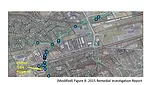
Plan consists of a combination of in situ chemical injections, soil mixing, engineering practices, institutional controls and long-term monitoring to address soil, groundwater and surface water contamination.
Investigating a region in southwest Pennsylvania with hydrocarbon extraction dating back to the early 1800s, small but statistically significant groundwater contamination hotspots were detected by researchers.
N3B investigates legacy sites from LANL’s Manhattan Project and Cold War operations and addresses environmental impacts resulting from these operations.
Researchers from the University of Tsukuba find that soil decontamination efforts in Fukushima result in constant, high levels of suspended sediments and a rapid decline in radiocesium particles.
In a study published this month in Nature Sustainability, a research group led by the University of Tsukuba has revealed that although the initial effects of increased sediment load in rivers caused by the Fukushima decontamination efforts were unsustainable, several factors worked in the region's favor to reduce these effects.
A project manager pleaded guilty in federal court today to misleading federal authorities about lead contamination in a Granby, Mo., city park after he was hired to conduct remediation at the site.

 RSS
RSS
.webp?height=125&t=1664821385&width=150 "Seed treatments")
.webp?height=125&t=1663952064&width=150 "Soil sampling")





.webp?t=1663953474)