Can abandoned oil wells become geothermal energy sources?
As more states explore converting orphan wells into clean heat, the multipurpose approach could solve a widespread problem.

Across the U.S., states are starting to explore an unusual energy idea: turning abandoned oil and gas wells into sources of geothermal energy.
On paper, it is an appealing solution. The U.S. has millions of inactive oil and gas wells, many of them leaking methane, polluting groundwater, and costing states huge amounts of money to clean up and seal. Now, some policymakers and researchers are asking whether those same wells could be reused to provide clean heat and, in some cases, even generate electricity instead of remaining expensive environmental hazards.
A recent overview from Canary Media traces how both red and blue states are advancing legislation and pilot programs around the concept. Oklahoma, New Mexico, Alabama, Colorado, and North Dakota have all launched studies or proposed pathways for converting old wells into geothermal or underground energy-storage systems.
The appeal is obvious, and the holes are already drilled. Oil and gas regions already possess extensive subsurface geological data. And many of the drilling techniques powering today’s geothermal boom were adapted directly from the fossil fuel industry. Reusing wells could theoretically lower upfront costs while creating a politically durable clean-energy story rooted in economic redevelopment rather than climate ideology.But the reporting also makes clear how early this still is.
Experts interviewed by Canary say most abandoned oil and gas wells are not hot enough to support large-scale electricity generation. Many also do not produce enough fluid for traditional geothermal systems, and converting older infrastructure can be both technically challenging and expensive. As a result, researchers are increasingly focused on “direct-use” applications such as heating schools, homes, greenhouses, and industrial facilities, where lower underground temperatures may still be useful and cost-effective.
The bigger question is whether this can actually become a meaningful climate and energy solution, or if it ultimately remains a limited cleanup strategy packaged as clean-energy development.
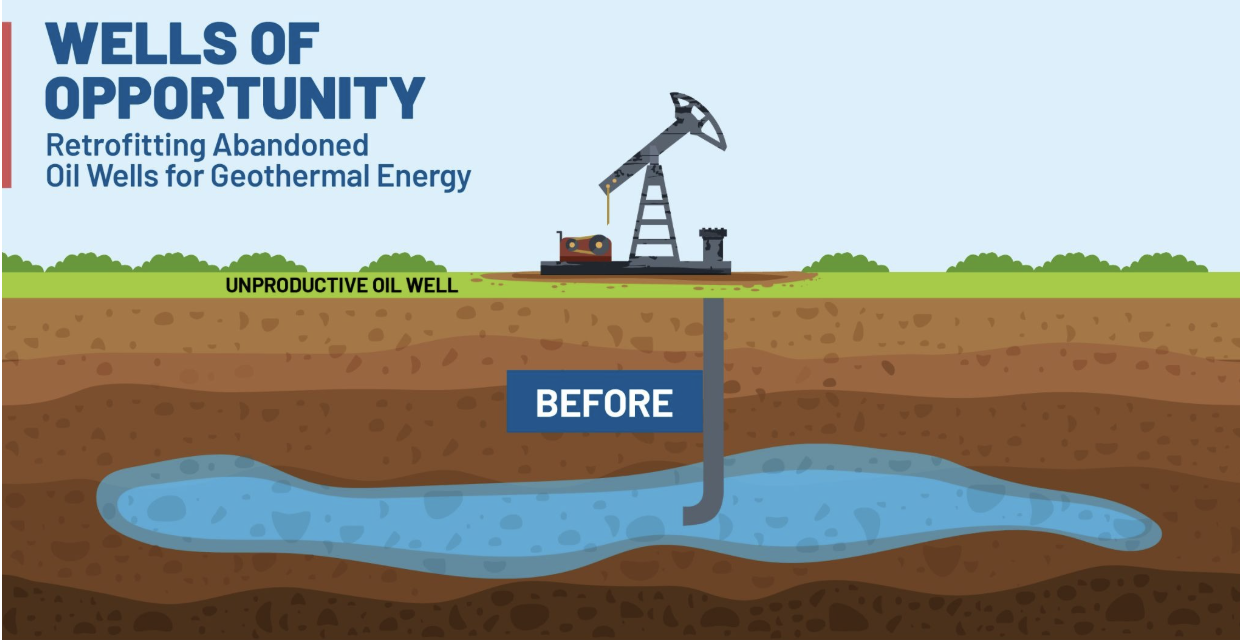
There are signs the idea is gaining traction. DOE-backed “Wells of Opportunity” projects are testing well conversion models in states including Oklahoma and Pennsylvania. Researchers at Penn State are also studying whether abandoned wells could be used for geothermal heating or even compressed-air energy storage. At the same time, state lawmakers are increasingly interested in the possibility of turning costly environmental cleanup projects into assets that could generate long-term economic value.
 Department of Energy
 Still, nearly every expert interviewed makes the same point: there are very few proven commercial examples operating at scale.
The timing is also notable politically. Geothermal has become one of the few energy technologies attracting support across party lines, partly because it builds on existing drilling infrastructure and workforce expertise from the oil and gas industry. Unlike wind and solar, geothermal has largely avoided becoming a flashpoint in broader political fights over renewable energy.
A few sourcing directions beyond the usual geothermal startup founders:
Well Done Foundation: Particularly around methane leakage, economics of remediation, and whether reuse models materially change cleanup incentives.
Center for Climate and Energy Solutions: Emily Pope has been vocal about both the promise and the technical limitations.
Pennsylvania State University: Arash Dahi Taleghani’s work on geothermal repurposing and compressed-air storage seems especially substantive.
University of Oklahoma and Southern Methodist University: Saeed Salehi has direct involvement in one of the DOE-supported pilot efforts.
State oil and gas regulators in Oklahoma, New Mexico, and Colorado: Where legislation and feasibility studies are actively evolving.
Environmental justice and groundwater advocates who may be skeptical that repurposing efforts distract from the core need to fully plug leaking wells.
The bigger question underneath all of this is whether geothermal repurposing is truly an energy story, or whether it is ultimately more about finding a productive use for stranded fossil fuel infrastructure and costly cleanup sites.
For a longer feature, the story connects several bigger themes: the legacy of oil and gas development, the cost of cleaning up abandoned infrastructure, efforts to reduce methane emissions, and the search for climate solutions that can gain political support in fossil-fuel-producing states.