
Logo remediation technology
NEW DATES! NEW LOCATION
April 13 -15 2027
Donald E. Stephens Convention Center
Rosemont, IL
search
linkedin youtube
  • Create Account
  • Sign Out
  • My Account
NEW DATES! NEW LOCATION
April 13 -15 2027
Donald E. Stephens Convention Center
Rosemont, IL
Logo remediation technology
  • HOME
  • ATTEND
    • Why Attend The Summit
    • Attended Companies
    • Photo Gallery
  • PRESENTERS
    • Scientific Advisory Board
  • STUDENTS
    • Student Program
    • Past Student Winners
  • TRAVEL
  • NEWSLETTERS
  • CONTACT
    • Stay Connected
    • Show Staff

Is $39 million enough to clean up PFAS contamination in Pennsylvania? The EPA thinks so.

Funding targets drinking water contamination in vulnerable communities

Very contaminated water source
Wikicommons Media
May 28, 2026

The Environmental Protection Agency is providing more than $39 million to Pennsylvania to help communities test for and address PFAS contamination in drinking water, particularly in smaller and underserved areas that often struggle to afford treatment systems and infrastructure improvements.

The funding is being distributed through the agency’s Emerging Contaminants in Small or Disadvantaged Communities grant program, which helps states and local water systems respond to PFAS and other contaminants that have raised increasing public health concerns in recent years.

PFAS, often called “forever chemicals,” are man-made compounds that have been linked to a variety of health concerns and are difficult to remove once they enter water systems. The chemicals have been found in drinking water supplies and food nationwide and are commonly tied to industrial facilities, firefighting foam, and military installations.

Public awareness and scientific research surrounding PFAS are still relatively recent developments. In 2010, only two publicly available scientific studies focused on PFAS in food and water. By 2022, that number had grown to 677 studies, reflecting a sharp increase in research activity and growing concern among regulators, utilities, and public health experts.

Why this matters…

According to the EPA, the Pennsylvania funding can be used for water testing, treatment planning, infrastructure improvements, and support for private well owners. The agency said communities may also use the money to address other emerging contaminants, including perchlorate, manganese, and 1,4-dioxane.

The announcement highlights the growing pressure on states and local utilities to deal with PFAS contamination as federal regulations become stricter. While the EPA has moved forward with new drinking water standards for certain PFAS compounds, many utilities are still weighing how to pay for treatment upgrades and meet the new requirements.

A major focus of the latest funding appears to be on smaller and rural communities, which often have aging water infrastructure and limited budgets. EPA officials said the agency’s newer “PFAS OUT” initiative is intended to help those systems identify contamination, reduce exposure, and prepare for future compliance requirements.

The broader challenge is scale. PFAS contamination is widespread, treatment technology remains expensive, and questions persist around long-term disposal methods for contaminated materials once the chemicals are filtered from water supplies.
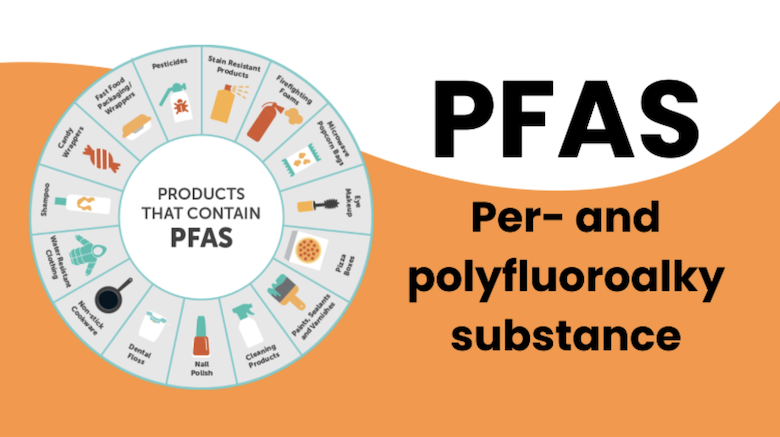
PFAS chartCourtesy / ACT Lab
There is also growing debate over who should pay for PFAS cleanup efforts. Many utilities and local governments have argued that companies responsible for manufacturing or using PFAS should help cover the cost of treatment upgrades, while federal and state regulators continue expanding testing, monitoring, and enforcement efforts across the country.

The issue also reflects broader concerns about environmental health, industrial pollution, and the aging infrastructure many communities rely on for drinking water. As federal standards become stricter, smaller utilities in particular are facing increasing pressure to upgrade systems that can be expensive to build and maintain.

For additional reporting, useful sources could include Pennsylvania environmental and public health agencies, water utilities currently managing PFAS treatment projects, and researchers studying the long-term effects of PFAS exposure. Communities located near military bases, airports, and industrial facilities tied to contamination may also provide insight into how the issue is affecting residents locally. Environmental advocacy groups and legal experts involved in PFAS litigation and cleanup efforts could offer a perspective on the regulatory and financial challenges still unfolding.

As research into PFAS continues to expand, the issue is likely to remain a major focus for regulators, utilities, and public health officials for years to come. For many communities, the challenge is no longer determining whether PFAS contamination exists, but how quickly and affordably it can be addressed.


This article was originally posted on www.thedriller.com.

Share This Story

Post a comment to this article

Report Abusive Comment

Manage My Account
  • eNewsletter
  • Online Registration
  • Manage My Preferences
  • Customer Service

More Videos

Related Articles

  • Seattle East Waterway

    EPA's plan to clean up 120 acres of contamination, Superfund site expansion and more

    See More
  • Texas

    Dispute Erupts Over PFAS Contamination Sources in Texas Farmland

    See More
  • Harrisburg DEP

    Report evaluates DEP's oversight of abandoned wells in Pennsylvania

    See More

Related Products

See More Products
  • The Web Application Hacker's Handbook: Discovering and Exploiting Security Flaws

  • Risk Analysis and the Security Survey

  • Security Convergence

See More Products

Events

View AllSubmit An Event
  • March 25, 2022

    Zero Tolerance is not Enough: Making Workplace Violence Prevention Really Work

    iSecurity is now available On-Demand! All content, exhibitors, webinars and Ask the Expert sessions from both the March and August shows are available for viewing through March 1, 2011. 
  • April 10, 2022

    What Works? Intelligent Video Management Software Is Put to the Test

       Independent security technology analyst, Steve Hunt will describe the recent technology evolution of the video surveillance market, focusing on a new technology niche that combines video management and video analytics within a single software framework. 
View AllSubmit An Event

Related Directories

  • ePublishing

    It is a long established fact that a reader will be distracted by the readable content of a page when looking at its layout. The point of using Lorem Ipsum is that it has a more-or-less normal distribution of letters, as opposed to using 'Content here, content here', making it look like readable English. Many desktop publishing packages and web page editors now use Lorem Ipsum as their default model text, and a search for 'lorem ipsum' will uncover many web sites still in their infancy. Various versions have evolved over the years, sometimes by accident, sometimes on purpose (injected humour and the like).
  • Security Magazine

    It is a long established fact that a reader will be distracted by the readable content of a page when looking at its layout. The point of using Lorem Ipsum is that it has a more-or-less normal distribution of letters, as opposed to using 'Content here, content here', making it look like readable English. Many desktop publishing packages and web page editors now use Lorem Ipsum as their default model text, and a search for 'lorem ipsum' will uncover many web sites still in their infancy. Various versions have evolved over the years, sometimes by accident, sometimes on purpose (injected humour and the like).
  • Test Listing 1

    Lorem Ipsum L1 is simply dummy text of the printing and typesetting industry. Lorem Ipsum has been the industry's standard dummy text ever since the 1500s.
×

Get our eNewsletter delivered to your inbox!

Stay in the know on the latest environmental sciences & remediation news and information.

SUBSCRIBE TODAY

BNP Events

Privacy Policy | Code of Conduct | Scam Warning

Copyright ©2026. All Rights Reserved BNP Media, Inc. and BNP Media II, LLC.
Design, CMS, Hosting & Web Development :: ePublishing